What are significant figures?
Significant figures are the digits in a measured or calculated value that communicate its precision. They are not simply “digits after the decimal”: they describe how finely a quantity has been reported.
A useful way to think about them is that every measured value contains a boundary between digits you know with confidence and a final digit that is estimated. Reporting 12.5 cm instead of 12.500 cm is not just a formatting choice; the extra zeros would imply a finer measurement than the instrument may support.
The calculator therefore reads the number exactly as written. Non-zero digits always count, zeros trapped between non-zero digits count, leading zeros are placeholders, and trailing zeros require attention to the decimal point or scientific notation.
How to count significant figures
The rules are easiest to apply from left to right, starting at the first non-zero digit and then checking what the zeros are doing.
Non-zero digits count
Every digit from 1 through 9 is significant. 81 has 2 significant figures and 26.2 has 3.
Zeros between digits count
A zero trapped between non-zero digits is significant. 205 and 2.005 both include captive zeros.
Leading zeros do not count
Zeros before the first non-zero digit are placeholders. 0.007 has 1 significant figure.
Trailing zeros need context
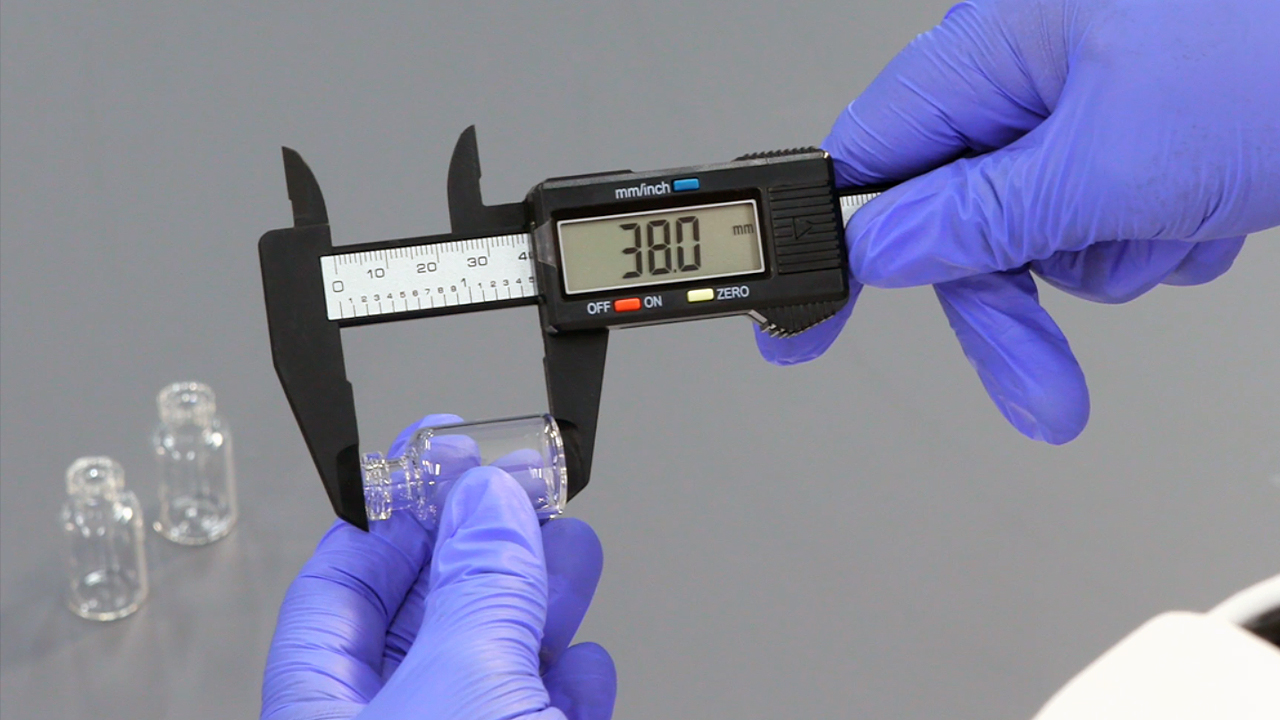
With a decimal point, trailing zeros count: 380.0 has 4. An integer such as 3800 is ambiguous unless notation clarifies it.
Why zeros cause most mistakes
Zeros can be placeholders for place value or measured digits that communicate precision. The written form is therefore important. In 0.00500, the first three zeros are leading placeholders, while the final two zeros are significant because they occur after the decimal point.
1500By the usual convention, trailing zeros are not assumed significant. To state four significant figures unambiguously, use 1.500 × 10³.
1500.The decimal point signals that the trailing zeros are intended to be significant, giving 4 significant figures.
0.00208Only 2, 0, and 8 count. The leading zeros simply locate the decimal point.
0.00500The final two zeros count, so the value has 3 significant figures.
Significant figures are about measurement precision
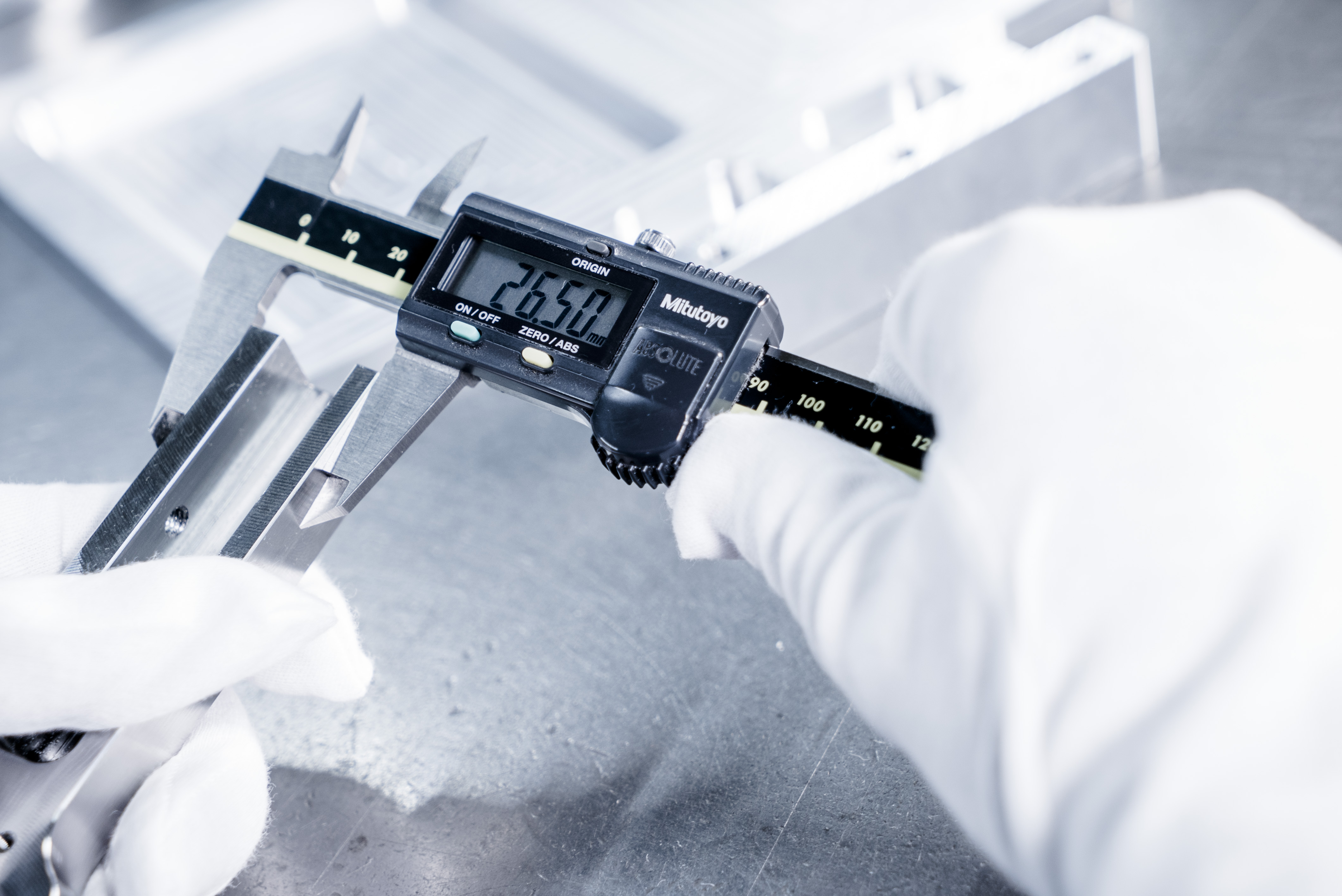
A more sensitive measuring instrument can justify more reported digits. A ruler, graduated cylinder, balance, or digital caliper does not reveal unlimited precision. Significant figures are one compact way to keep the reported number consistent with the measurement process.
How to round to significant figures
To round a number to n significant figures, first identify the first significant digit, count n digits, then inspect the next digit. A next digit of 5 or greater rounds the retained digit upward; a smaller digit leaves it unchanged.
Find the first non-zero digit
This establishes the first significant position, regardless of where the decimal point sits.
Keep n digits
Count only significant digits, not leading placeholders.
Inspect the next digit
Use the next digit to decide whether the final kept digit changes.
Report clearly
Use trailing zeros or scientific notation when needed to make precision explicit.
Significant figures in addition, subtraction, multiplication, and division
The rule changes with the operation. Addition and subtraction are controlled by decimal place; multiplication and division are controlled by significant-figure count.
| Operation | Rule | Example | Reported result |
|---|---|---|---|
| Addition | Match the least precise decimal place | 128.1 + 1.72 + 0.457 | 130.3 |
| Subtraction | Match the least precise decimal place | 3.20 − 1.55 | 1.65 |
| Multiplication | Keep the fewest significant figures | 4.321 × 3.14 | 13.6 |
| Division | Keep the fewest significant figures | 5.452 ÷ 1.67 | 3.26 |
Exact counted values and defined conversion factors do not limit the precision of measured quantities.
Use scientific notation to remove ambiguity
Scientific notation makes significant figures visible. The coefficient carries the precision; the exponent only sets the scale. For example, 1.3 × 10³ has 2 significant figures, while 1.300 × 10³ has 4.
Same value, different precision
Three significant figures. The coefficient keeps the two trailing zeros.
Scale without changing sig figs
The exponent changes the magnitude, not the number of significant figures.
Worked significant-figures examples
| Number | Sig figs | Rounded form | Scientific notation |
|---|---|---|---|
| 100 | 1 | 100 | 1 × 10² |
| 100.00 | 5 | 100.00 | 1.0000 × 10² |
| 0.00208 | 3 | 0.00208 | 2.08 × 10⁻³ |
| 0.004562 → 2 sf | 4 input | 0.0046 | 4.6 × 10⁻³ |
| 2648 → 3 sf | 4 input | 2650 | 2.65 × 10³ |
| 24.0725 → 3 sf | 6 input | 24.1 | 2.41 × 10¹ |
Do not confuse significant figures with decimal places
Decimal places describe position relative to the decimal point. Significant figures describe how many meaningful reported digits are present. A value can have many decimal places but only a few significant figures, especially when leading zeros are present.
Where significant figures are used
Significant figures are especially useful in science and engineering because the number of reported digits should reflect the precision of the measurement or the least precise measured input used in a calculation.
🧪 Chemistry & laboratory work
Mass, volume, concentration, temperature, and density measurements are reported with precision that matches laboratory instruments.
📐 Engineering & manufacturing
Measured dimensions and tolerances should not be expressed with unjustified precision. The reporting format becomes part of technical communication.
⚛️ Physics
Calculated quantities inherit the limitations of their measured inputs. Correct rounding prevents a result from appearing more precise than the experiment.
📊 Scientific reporting
Tables, graphs, lab reports, and specifications use significant figures to keep reported results consistent and interpretable.
A practical way to check your result
Before submitting a lab answer or technical calculation, ask three questions: What instrument or source produced the number? Which zeros are actually significant? Which arithmetic rule controls the final precision? If a whole number ends in zeros and precision matters, use scientific notation to make the intended number of significant figures unambiguous.
FAQ
By the usual convention, 100 has 1 significant figure because the trailing zeros are not assumed significant without a decimal point or other notation.
Five. The decimal point makes the trailing zeros part of the stated precision.
One. The zeros before the 1 are leading placeholders.
Three: 2, 0, and 8. The middle zero is between non-zero digits, so it counts.
Three: 5, 0, and 0. The final zeros occur after the decimal point and communicate precision.
2650, or more clearly 2.65 × 10³ when you want the three significant figures to be unmistakable.
Decimal places count positions after the decimal point; significant figures count meaningful reported digits.